
A Conversation About MAID (Medical Assistance in Dying)
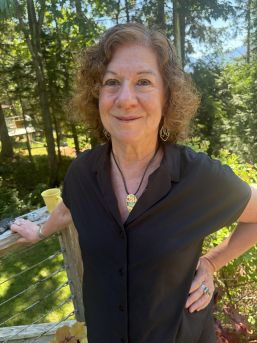
Photo Credit: Peter Busby
A Conversation About MAID (Medical Assistance in Dying)
With Karen Gelmon, MD FRCPC, Medical Oncologist (Retired from Oncology Practice), Professor of Medicine (UBC) and MAID Provider/Assessor (Vancouver Coastal Health) and Memorial Society BC Board Member, Verena Foxx.
VF: What are MAID practitioners called, and which health professionals can fill this role?
Dr KG: Speaking for Vancouver Coastal Health specifically, the MAID practitioners are called assessors and providers/prescribers. The persons who fill that role are both physicians of all trainings and nurse practitioners. All of them take specific courses prior to assuming the role.
VF: What are MAID providers responsible for?
Dr KG: According to the law, a patient/client wanting to do MAID initially has to fill out a Request Form. (Contact your regional BC Health Authority). At Vancouver Coastal, Care Coordinators assess the patient/client request, and if appropriate, they assign two different MAID practitioners – one to act as an Assessor and one as an Assessor and Provider. All MAID applications require two independent assessments, after which eligibility is confirmed. If the request is eligible, it’s up to the applicant to decide when and if they want the provision to take place.
The first thing that is important in the assessment is to determine eligibility, and that can be according to Track 1 or Track 2.
Track 1 are persons with a reasonably foreseeable death (incurable cancers, end stage heart, kidney, liver or lung disease; severe frailty) with a prediction of death in the near or medium term although not necessarily imminent. As soon as eligibility is determined, persons can go ahead. There is no waiting time.
Track 2 are people with grievous and irremediable suffering such as a serious, incurable disease, illness, or disability, in an advanced state of irreversible decline, causing intolerable physical/psychological suffering. One of the assessors should be an expert in the disease or an expert can be brought in to see if there are any ways to remediate suffering. After the initial assessment, a person must wait 90 days prior to doing the provision.
MAID eligibility was initially defined by Bill C-14 which restricted MAID to individuals whose natural death was “reasonably foreseeable.” This was modified in 2021 with Bill C-7 which removed this restriction, allowing individuals with chronic conditions or disabilities that cause intolerable suffering—but who are not near death—to qualify.
When MAID assessments are done, the following two aspects are also emphasized:
- there are other end stage options such as hospice, palliative care, or prolonged sedation;
- putting in a request for MAID and getting eligibility for it, does not require a person to go through with it. A patient/client can withdraw their request, never act on their request, or withdraw or cancel their request. Even last minute.
VF: Can a person request a specific doctor to act as their MAID provider?
Dr KG: Yes, but it is an uncommon request at VCH.
VF: Where can MAID be administered?
Dr KG: In (some) hospitals, in a hospice, in a health care facility, and at home.
VF: Is there a cost for MAID?
Dr KG: No, it’s covered by BC Medical. One of the eligibility criteria is that the patient/client has healthcare, is over 18, and a resident of BC.
VF: Why did you choose to become a MAID provider?
Dr KG: I’ve always been interested in end-of-life, and I’ve always been interested in how people approach death. Some of the variability is cultural, or religious and some is just personal. As an oncologist, although I’ve had a lot of patients that have been cured, I dealt with people fearing death all the time. I was interested in this and in end-of-life experiences. I did a Death Doula course in 2025, and then subsequently realised that I could use the skills I learned as a Death Doula to become a MAID Provider.
My oncology practice was always about patient-centred care, about listening to what people want, what is important to them. This is the ultimate thing that is important to some people, and this is patient-centred care. I am pleased to be able to provide people who are appropriate – not everyone – with the ability to have some control over their lives.
VF: Has there been a big learning curve or unexpected challenges?
Dr KG: One of my learning curves, despite my experience as an oncologist, was the Death Doula course. It taught how to hold space for people, for them to be able to express their views, fears, etc. Those skills were very helpful because it’s not about me prescribing something, it’s about me understanding the person’s request, understanding their suffering, understanding the person’s frame of mind.
In some ways these are skills that are part of oncology and in some ways about expanded listening skills. It’s been interesting for me to see how my personal interactions have changed.
It’s also been a learning curve in terms of the wide variety of persons I’m seeing. Statistically over 95% of people getting MAID are on Track 1. I am seeing people from all walks of life. It’s important to understand that there is no coercion; this is someone’s individual decision. Understanding where people are coming from is interesting. I’ve met some phenomenal people. Another interesting thing is family interactions. No one wants to lose a family member, particularly a parent. I’m seeing families come together to respect the individual’s wishes, and not to see their continued suffering with end stage illnesses. It’s reassuring to see families come together, even when there can be differences.
The big words around MAID are Respect, Dignity, Autonomy and Relief of Suffering.
Dr. Gelmon is a distinguished Vancouver-based oncologist, and a much-loved clinician, friend, wife, mother & grandmother.
Contact your regional Health Authority for further information.